Florence Cooking Classes: The Complete Guide to Tuscan Food Experiences
Florence does not hide its food culture. It announces it in the steam rising from ribollita pots, in the sizzle of a bistecca on a scorching grill, in the egg-yellow dough being stretched on a floured table in a back-street trattoria. For visitors, a cooking class is one of the few ways to step behind that curtain — to move from spectator to participant in the culinary tradition that has been shaping Tuscan kitchens for centuries.
This guide covers everything you need to know before booking a Florence cooking class: the different types available, how to choose one that is actually worth the money, what you will realistically cook and eat, how much to budget, and practical advice to make the experience count.
At a Glance: Florence Cooking Classes
| Category | Key Detail |
|---|---|
| Best class length | 3–5 hours (includes eating) |
| Ideal group size | 8–12 people maximum |
| Price range | €40–€320 per person |
| Best booking window | 1–2 weeks ahead in peak season |
| Top formats | Pasta workshop, market-to-table, full-day villa |
| What's usually included | Apron, ingredients, wine, full meal, recipe card |
| Best neighborhoods | San Lorenzo, Oltrarno, Santa Croce |
What to Expect from a Florence Cooking Class
Most Florence cooking classes fall into two broad formats:
Cooking only: You arrive at a culinary studio or a cook's home kitchen, spend 2.5 to 3.5 hours preparing a menu, then sit down and eat what you made, usually with wine. Total time runs 3 to 5 hours.
Market-to-table: The class begins with a guided walk through a fresh market — typically Mercato Centrale in San Lorenzo or the Mercato di Sant'Ambrogio near Santa Croce — where the instructor explains seasonal produce, local ingredients, and what they are selecting and why. You then cook and eat. Total time is 4 to 6 hours.
Either format is worth doing. The market-to-table experience adds context and is often more memorable, but it requires more time and a slightly higher budget. If you can only do one and have a full afternoon free, the market visit makes a meaningful difference to how you understand what ends up on the plate.
Class sizes vary significantly. Boutique experiences cap at 8–12 participants, which means everyone actually gets their hands on the dough. Larger group sessions of 15 to 20 participants trend toward demonstration with occasional hands-on moments. Small-group or private classes are almost always the better investment if you want a genuinely interactive experience.
What is typically included: An apron to wear during class (and often to keep), all ingredients, printed or emailed recipes, a full meal of what you cooked, wine or prosecco, and sometimes coffee with dessert to close.
Types of Cooking Classes Available in Florence
The city offers a wide spectrum of culinary experiences. Here is a breakdown of the main categories and what makes each one worth considering.
Fresh Pasta Workshops
The most popular and widely available class type in Florence. You will learn to make pasta dough from scratch — typically "00" flour and egg yolks — and shape it into pappardelle, tagliatelle, tagliolini, or the more rustic hand-rolled pici. Most classes cover at least one sauce: a slow-cooked ragù, a simple sage-butter, or a fresh tomato base. Expect around 90 minutes of actual cooking before sitting down to eat.
These classes work well for all experience levels. The physical process of kneading dough, resting it, rolling it thin, and cutting it into even strips is something every traveler can do and remember. The ratio — 100g of "00" flour per egg yolk — is the kind of practical knowledge you carry home.
Best for: First-time visitors, couples, family groups, anyone who wants a usable skill to replicate at home.
Market-to-Table Experiences
These begin at a city market: usually Mercato Centrale, the covered market hall in San Lorenzo, or the more neighbourhood-feel Mercato di Sant'Ambrogio near Santa Croce. The instructor guides you through stalls and explains what they are choosing — which cut of Chianina beef, which variety of cannellini bean, which Florentine cavolo nero — and why the season matters. The cooking session follows back at the kitchen.
The connection between selecting an ingredient and then turning it into a finished dish is one of those things that sounds unremarkable until you are standing in front of a porcini stall at 9am while a Florentine cook explains why size matters. It changes how you cook and how you shop.
Best for: Food-curious travelers, those who want a deeper understanding of Florentine cuisine and market culture.
Bistecca alla Fiorentina and Meat Workshops
The Florentine T-bone is an art form: Chianina beef from the Val di Chiana, cut no thinner than 5 centimetres, seared over an intensely hot wood or charcoal fire, served rare or sent back. Some butchers and culinary schools offer workshops specifically focused on the bistecca — fire management, the cut, the resting time, the accompaniments (no sauce, no lemon, just salt and a little olive oil at the end). These are niche but genuinely memorable for anyone who wants to understand why this dish is treated as sacred in Florence.
Best for: Meat enthusiasts, groups wanting a memorable dinner-party skill, anyone who has ever been disappointed by steak cooked elsewhere.
Gelato and Pastry Classes
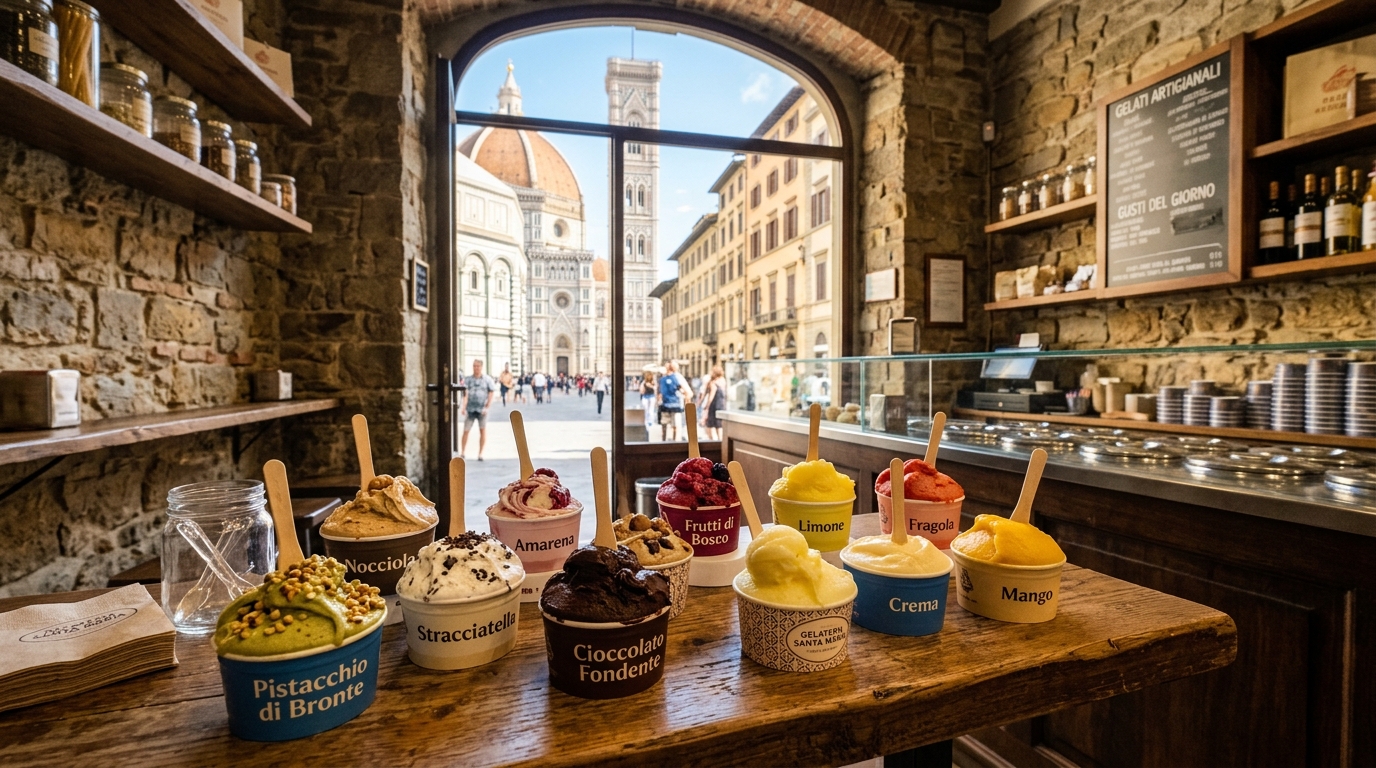
Yes, you can learn to make real artisan gelato — the kind with actual egg yolks and milk, not the industrial compound most of the world calls gelato. Cantucci (almond biscotti), ricciarelli (soft Sienese almond cookies), and tiramisu also feature in Florence pastry workshops. These tend to run shorter, around 90 to 120 minutes, and are popular with families and those who prefer the sweet side of the kitchen.
Best for: Families with children, dessert lovers, travelers with shorter afternoon slots.
Wine and Food Pairing Sessions
Not strictly cooking classes, but worth including in any culinary itinerary. Enotecas and independent wine educators offer sessions on Tuscan wine — Chianti Classico, Brunello di Montalcino, Vernaccia di San Gimignano — paired with a curated food spread. You will learn how to read a Chianti Classico label, why Super Tuscans exist and what they actually taste like, and how the wine pairing principles that Florentine restaurants apply actually work.
Best for: Wine lovers, couples, any evening slot when you want something structured rather than simply bar-hopping.
Full-Day and Villa Experiences
Several operators outside the city run full-day immersive experiences at private villas or agriturismo farms in the Chianti hills south of Florence. These include a market or farm visit, hands-on cooking of a multi-course lunch, wine tasting from the estate's own production, and often a tour of the olive groves or vineyard. They cost significantly more but deliver a fuller picture of Tuscan food culture in a single day.
Best for: Those with extra budget and at least one flexible day outside the city.
How to Choose a Cooking Class in Florence
With hundreds of listings across booking platforms, quality varies considerably. Here is how to filter for experiences worth booking.
Check the hard cap on class size. Any listing advertising "up to 20 participants" is likely to be more demonstration than hands-on. Look for classes capping at 10–12 people maximum. Private classes of 2 to 6 people are the gold standard if budget allows.
Read the exact menu, not the genre. "Traditional Tuscan cooking" tells you nothing. "Pici all'aglione, ribollita, cantucci con vin santo" tells you exactly what skills you are developing and what you will eat. Specific menus also signal that the instructor has a defined, tested curriculum rather than improvising on the day.
Prioritise real cooks over "chefs." Florence has excellent professional chefs, but some of the most memorable cooking classes are run by home cooks — women who have been making the same pasta for forty or fifty years in the same kitchen. These tend to be smaller, more intimate, and more genuinely Florentine in character than a polished culinary school setting.
Verify exactly what is included. Does the price cover wine? Prosecco on arrival? Printed recipes? Apron to keep? Some listings appear good value until you realise wine is extra — and often overpriced at the venue. A class listed at €75 with wine included competes differently with one at €60 with wine billed separately at €20 a glass.
Where to book: Platforms like GetYourGuide, Viator, and Airbnb Experiences aggregate many Florence options and include verified reviews from past participants. Cookly specialises in cooking class booking globally and has a strong Florence selection. Booking directly with the instructor often yields a slightly better price and easier communication about dietary needs.
Red flags to avoid: Classes held in hotel lobbies rather than actual kitchens; operators who cannot tell you who the instructor is; class descriptions listing 20 or more participants as standard; no specific menu in the listing.
What You Will Typically Cook in Florence
While menus vary by instructor, season, and class type, these are the dishes you are most likely to encounter in a Florence cooking class.
Primi (first courses)
- Pappardelle or tagliatelle with wild boar ragù or slow-cooked beef ragù
- Pici — the thick, hand-rolled spaghetti of southern Tuscany — with garlic and tomato (all'aglione) or cacio e pepe
- Ribollita, the bread-thickened Tuscan bean and cavolo nero soup, cooked twice as the name suggests
Secondi (main courses)
- Bistecca alla Fiorentina in specialist butchery and meat workshops
- Pollo alla cacciatora, hunter's chicken braised with olives, capers, and white wine
- Arista di maiale, the Florentine slow-roasted pork loin with rosemary, garlic, and fennel seeds
Dolci (desserts)
- Tiramisu — Florentines take this seriously, and a well-made version bears little resemblance to the average restaurant version outside Italy
- Cantucci with vin santo for dipping
- Panna cotta with seasonal fruit compote
Seasonal additions: In autumn, look for classes incorporating fresh porcini mushrooms, white truffles from the San Miniato area, or chestnuts. In spring, artichokes from the Maremma coast and fresh fava beans appear in many menus. Asking what the instructor is planning to source that week is always a worthwhile question before you book.
How Much Does a Florence Cooking Class Cost?
| Type | Price Per Person | Duration |
|---|---|---|
| Short pasta workshop | €40–€65 | 2–2.5 hours |
| Standard hands-on class (no market visit) | €75–€110 | 3–4 hours |
| Market-to-table experience | €100–€150 | 4–6 hours |
| Private class (2–4 people) | €120–€200 per person | 3–5 hours |
| Full-day villa experience | €180–€320 | All day |
Is it worth the money? For most travelers, yes — particularly at the mid-range tier. A €100–€120 market-to-table class that includes wine and a full dinner is comparable to eating at a good Florence restaurant, except you leave with skills you can replicate at home. The combination of instruction, food, wine, and a memorable afternoon makes classes at this price point some of the best-value experiences in the city.
Practical Tips for Getting the Most from Your Class
Book 1–2 weeks ahead minimum. The best small-group classes in Florence fill up quickly, especially between June and September and around public holidays. If you have fixed travel dates, book as soon as your itinerary is confirmed rather than leaving it to a few days before arrival.
Arrive hungry. Classes almost always end with a full meal of what you have prepared. Coming in after a heavy lunch undermines the experience significantly — and means you will not fully appreciate what you just cooked.
Mention dietary restrictions when booking, not on the day. Most operators accommodate vegetarian requests easily with advance notice. Gluten intolerance and severe allergies require more lead time to manage. Check the operator's policy before booking if dietary needs are a factor.
Wear comfortable, closed-toe shoes. You will be standing for 2 to 3 hours on hard floors, often near hot surfaces. Sandals are not ideal, particularly in classes involving a wood-fired grill.
Do not skip the wine. Most classes include a glass or two of local wine with the meal. This is often a well-chosen Chianti Classico or Vernaccia — worth engaging with rather than simply sipping. Ask the instructor about it; they usually have something to say about where it is from.
Ask for the recipe card. Some instructors hand these out automatically; others do not unless asked. The pasta ratios — 100g of "00" flour per egg yolk, rested for 30 minutes — are the details that determine whether you can replicate the dish at home six months later.
A Good Base for Florence's Culinary Scene
Florence's cooking class studios cluster in the neighbourhoods that still have active food culture: near Mercato Centrale in San Lorenzo, along the lanes of Oltrarno south of the Arno, and around the Mercato di Sant'Ambrogio in the Santa Croce area. All three are within easy reach of the city centre on foot.
The Guido Monaco Apartment — located in the Santa Maria Novella neighbourhood, steps from the central train station — puts all of these areas within 10 to 20 minutes on foot. After a late-afternoon cooking class that finishes with a full dinner and wine around 8pm, walking back to a comfortable apartment is considerably more practical than navigating public transport across the city.
The apartment sits close to Mercato Centrale, within range of several of Florence's most reliable wine bars, and an easy walk from the trattorias that serve the traditional Florentine menu most cooking classes are built around. If you are planning a trip structured around Tuscan food — a cooking class one afternoon, a day trip to Chianti, mornings at the market — it is a well-positioned base.
Check availability at Guido Monaco Apartment — a comfortable base near Santa Maria Novella station that puts Florence's best food markets, cooking studios, and trattorias within easy walking distance.
Frequently Asked Questions
Do I need cooking experience to take a class in Florence? No. Almost all Florence cooking classes are designed for complete beginners. Instructors walk you through every step, from dough ratios to sauce timing to how long to rest pasta before cutting. The only prerequisite is willingness to get your hands floury.
How long does a typical Florence cooking class last? Standard hands-on classes run 3 to 4 hours, including the cooking and eating portions. Market-to-table experiences extend to 4–6 hours due to the market walk. Short pasta workshops can be completed in 2 to 2.5 hours — a useful option if your afternoon is limited.
Are cooking classes in Florence worth the money? For most travelers, yes. A mid-range class at €80–€130 per person includes hands-on instruction, a full meal with wine, and recipes to take home — comparable in cost to a decent restaurant dinner but significantly more memorable. The experience consistently ranks as a trip highlight for food-interested visitors.
Can children join cooking classes in Florence? Many operators welcome children aged 8 and up, particularly at pasta and dessert workshops. Some classes are adults-only due to sharp tools and hot surfaces. Family-friendly classes exist and are specifically marked as such on most booking platforms. Check the listing or ask the operator before booking.
When should I book a cooking class in Florence? Book as early as possible if visiting between June and September. For shoulder season travel in March, April, May, October, or November, booking 5 to 7 days ahead is generally sufficient, though earlier booking gives you better choices of time slot and instructor.
What is the difference between a cooking class and a food tour in Florence? A cooking class is hands-on: you prepare food under instruction and eat what you make. A food tour is a guided walk between producers, markets, and restaurants where you taste but do not cook. Both are worth doing on a food-focused Florence trip. The most natural sequence is a food tour early in the trip to understand ingredients and culture, followed by a cooking class mid-trip to apply that knowledge with your hands.
Book Your Florence Stay
Experience the comfort of Guido Monaco apartment — perfect location, modern amenities, and a private terrace.