Lucca Day Trip from Florence: Your Complete Guide to Tuscany's Walled City
Most visitors to Florence tick off the Uffizi, climb the Duomo, and then wonder where to go next. They consider Siena or Pisa — and rightfully so — but a surprising number overlook Lucca entirely. That's their loss. Tucked just 80 kilometres northwest of Florence, Lucca is one of Tuscany's most perfectly preserved medieval cities: compact, traffic-free within its walls, and genuinely lived-in rather than turned over entirely to tourism. A day trip from Florence to Lucca rewards visitors with Roman amphitheatre ruins converted into a piazza, Romanesque churches, excellent olive oil, and the quiet pleasure of cycling along Renaissance-era walls.
This guide covers everything you need: train logistics, the best things to see and do, where to eat, what to skip, and how to make the most of a single day in Lucca.
Getting from Florence to Lucca by Train
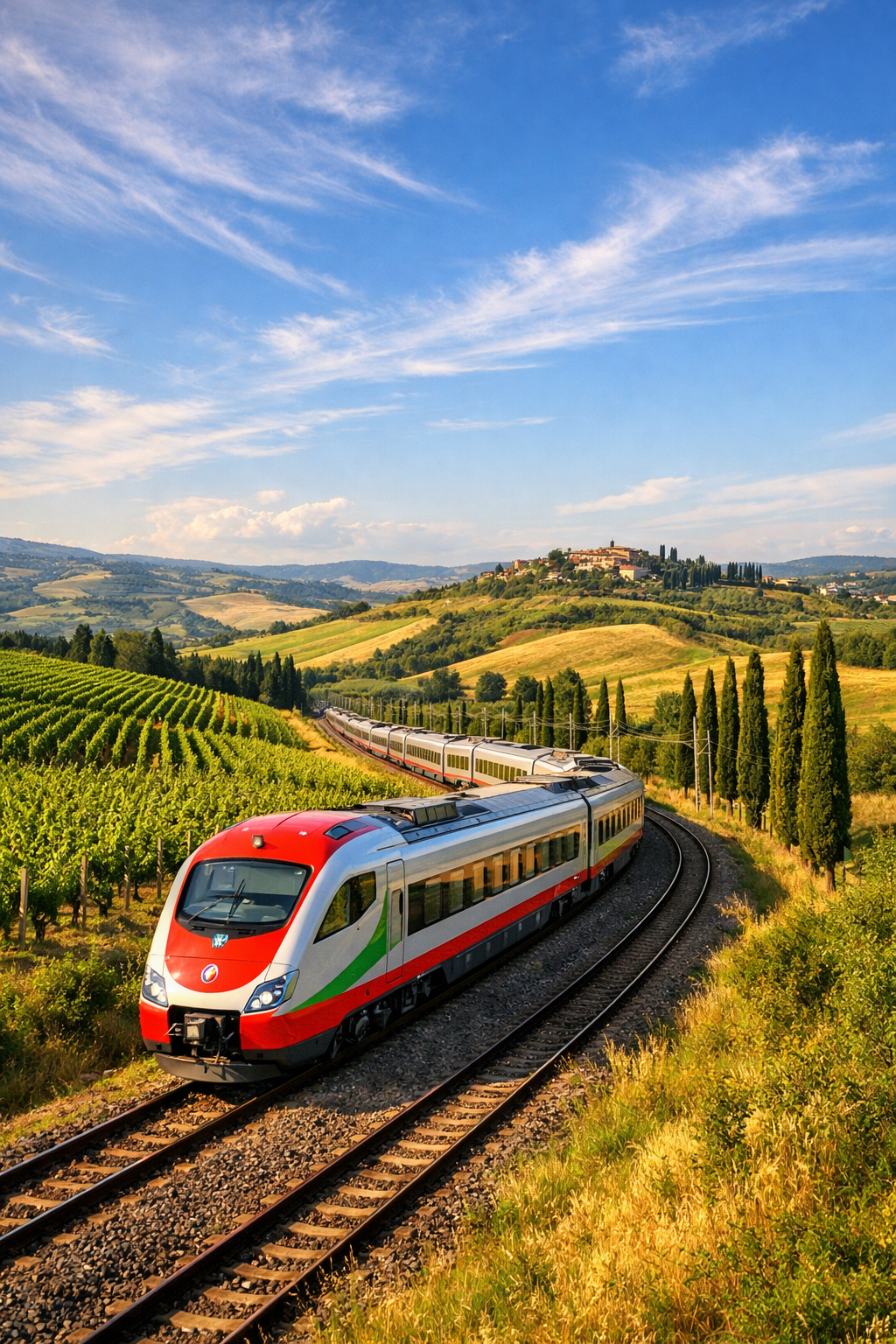
The easiest and most practical way to reach Lucca from Florence is by direct train. Trains run frequently from Florence Santa Maria Novella station (the same station near your accommodation in the city centre), making this day trip genuinely convenient.
Key train facts:
- Journey time: approximately 1 hour 20 minutes to 1 hour 30 minutes on direct trains
- Frequency: trains every 30–60 minutes throughout the day, with more frequent service in peak hours
- Ticket price: around €9–€12 each way for a standard Regionale ticket (no reservation required)
- Arrival: trains pull in at Lucca Stazione, located just outside the city walls — a five-minute walk to the main entrance
The train from Florence runs via Pisa Centrale, where you may need to change depending on the service. Check the Trenitalia website or app for current timetables. Look for direct "Regionale Veloce" trains, which are faster and may not require a change at Pisa. Always validate your ticket before boarding at the yellow machines on the platform.
Recommended timing: Catch a 08:00–09:00 train from Santa Maria Novella to arrive by 10:30 and have a full six to eight hours in Lucca. The last convenient return train to Florence typically departs Lucca around 19:30–20:00, giving you a comfortable buffer.
Driving alternative: If you prefer the flexibility of a car, the A11 autostrada connects Florence to Lucca in roughly 90 minutes depending on traffic. Parking outside the walls is plentiful and free in some areas, though driving inside the walls is restricted. For this particular trip, the train genuinely wins on ease.
Walking the Walls: Lucca's Most Iconic Experience
The single most distinctive thing about Lucca — the feature that sets it apart from every other Tuscan city — is the Mura di Lucca, the Renaissance-era city walls that ring the historic centre in a 4-kilometre loop. Unlike the crumbling fragments you see in most Italian towns, Lucca's walls are intact, wide, tree-lined, and converted into a public promenade and park at the top. They work.
Built between 1513 and 1645, the walls were designed to withstand cannon fire, which is why they're so thick and low — a defensive geometry that looks unusual compared to medieval walls. The bastions (triangular protrusions) give the circuit a star-shaped plan visible from above.
Walking or cycling the full circuit takes about an hour on foot or 30 minutes by bike. Bicycle rental is widely available near the main gates and at shops along the walls themselves — expect to pay €3–5 per hour for a standard bike or €12–15 for a half-day rental. You don't need to cycle; walking is equally pleasant and gives you more time to stop and look down into the city.
Practical tip: Do the walls early in the morning or late afternoon. At midday in summer the exposed top gets hot quickly. Early morning light also makes the terracotta rooftops of Lucca look particularly beautiful from above.
Piazza dell'Anfiteatro: A Roman Stadium Frozen in Time
If you see one piazza in Lucca, make it this one. Piazza dell'Anfiteatro sits at the centre of the old city and occupies the exact footprint of a Roman amphitheatre built in the 1st–2nd century AD. The medieval builders didn't demolish it — they built their houses on and around it, preserving the oval shape in the street layout and architecture. Walk through any of the four narrow archways into the piazza and the effect is immediately striking: you're standing inside a Roman arena, except it's now surrounded by ochre and terracotta-painted houses with laundry lines above and café tables below.
This is one of the most architecturally unusual public spaces in Italy, and surprisingly few travellers beyond Italy-obsessed visitors know it exists. The piazza fills with locals in the evenings (Lucchesi use it as a genuine gathering spot, not just a tourist backdrop), but in the morning it's calm, photogenic, and perfect for a coffee at one of the surrounding bars.
The original Roman seats are long gone, but the substructure of the amphitheatre was incorporated into the medieval buildings — you can sometimes see old Roman stonework at street level on the outer ring of buildings that surrounds the oval. Look for the arched openings that mark where the amphitheatre's vaults once stood.
San Martino Cathedral and the Holy Face of Lucca
Lucca's cathedral, the Cattedrale di San Martino, stands at the southern end of the old city near Piazza San Martino. It's a Romanesque-Gothic building begun in the 11th century and extensively rebuilt in the 14th century, notable for its asymmetrical façade — the bell tower was already standing when the nave was expanded, which is why the arches on the left side of the portico are compressed to fit around it.
The interior is worth entering for two reasons. First, the Volto Santo (Holy Face of Lucca) — a large wooden crucifix housed in a gilded octagonal tempietto in the left nave. This crucifix, according to medieval tradition, was carved by Nicodemus at the time of the Crucifixion and miraculously completed. Whatever the legend, the object was one of the most celebrated religious relics in medieval Europe: English kings swore oaths on it, traders from Lucca (one of medieval Europe's major banking and textile hubs) used it as a symbol of trust in their international dealings.
Second, the tomb of Ilaria del Carretto (1405–1406) by Jacopo della Quercia in the sacristy — a Renaissance sculpture of a young noblewoman lying in eternal sleep with her dog at her feet. It's considered one of the finest examples of early Renaissance funerary sculpture in Italy and is regularly overlooked by visitors who haven't read about it beforehand.
Entrance to the cathedral is free; the sacristy where the Ilaria tomb is displayed charges a small admission fee (around €3).
San Michele in Foro and the Romanesque Churches
If you have time beyond the cathedral, Lucca rewards exploration of its other churches. San Michele in Foro (Saint Michael on the Forum) stands on what was the ancient Roman forum — hence the name — and occupies a central position in the city that makes it easy to find. Its façade is one of the most elaborate examples of Pisan Romanesque architecture in Tuscany: four tiers of blind arcading decorated with twisted columns, carved animals, and varied marble inlays. The interior is simpler, but the façade alone makes the detour worthwhile.
San Frediano, near the northern walls, is another Romanesque church worth a look: its façade features a large 12th-century Byzantine mosaic depicting the Ascension, which is unusual for Tuscany and immediately recognisable from across Piazza San Frediano. Inside there is a remarkable 12th-century baptismal font — a large circular basin carved with biblical scenes — and frescoes by Jacopo della Quercia.
Unlike Florence's churches, most Lucca churches have no queues. You simply walk in.
Eating and Drinking in Lucca
Lucca sits in the province of Lucca, which has its own food culture distinct from the rest of Tuscany — and the city takes this seriously.
What to eat:
- Buccellato di Lucca — a sweet ring-shaped bread flavoured with anise and raisins, unique to the city. The most famous version comes from Taddeucci bakery on Piazza San Michele, which has been making it since 1881. Buy a whole ring to share or ask for a slice.
- Farro della Garfagnana — spelt from the Garfagnana valley north of Lucca. Look for it in soups (minestra di farro) on restaurant menus.
- Olive oil — the Lucchesia produces some of Italy's finest extra virgin olive oil. The area around Lucca is known for a lighter, more delicate style than Tuscan oils from further south. Buy a bottle at one of the oil shops near the main piazzas.
- Cecina — a thin, savoury chickpea flatbread, common in Pisan-Lucchese cooking. Find it at bakeries for a cheap and filling snack.
Where to eat:
For lunch, look for restaurants slightly off the main tourist drag around Piazza dell'Anfiteatro — prices drop and the kitchens tend to focus more on local cooking. Restaurants along Via Fillungo (Lucca's main pedestrian shopping street) are convenient but slightly more touristic. Aim to eat before 13:00 or after 14:00 to avoid peak lunchtime crowds.
Avoid restaurants with laminated menus in five languages posted at the entrance and photographs of every dish on the menu — these are rarely the kitchens taking regional cuisine seriously.
Practical Tips for Your Lucca Day Trip
The essentials:
- Lucca's historic centre is almost entirely pedestrianised and flat — it's extremely walkable and wheelchair accessible compared to hill towns like San Gimignano or Cortona.
- The city is compact: the main sights fit comfortably in four to five hours of relaxed exploration, leaving time for lunch and the walls circuit.
- Most museums and churches close on Mondays — plan accordingly if visiting mid-week.
- ATMs are available near the train station and along the main streets. Many smaller shops and markets prefer cash.
- Lucca gets busy in summer (July–August), particularly on weekends when day-trippers from Pisa and the Versilia coast arrive. Weekday visits are quieter.
- The Lucca Comics & Games festival (late October–November) is one of Europe's largest comic and gaming conventions and draws enormous crowds — book trains well in advance if visiting then, but also consider going specifically for the event if that's your interest.
What to skip on a day trip:
The museums inside Villa Guinigi and Palazzo Pfanner are worth visiting on a longer stay but not essential for a single day. The Torre Guinigi (a medieval tower with a garden of holm oaks growing on its roof) is a Lucca icon and the climb is short — visit it if the queue is short, skip it if there's a wait.
Why Guido Monaco is the Perfect Florence Base for Lucca
Florence is the obvious base for a Lucca day trip — it's closer than Siena or any other major Tuscan city, and the train connection from Florence Santa Maria Novella is direct and frequent. That makes the location of your Florence accommodation genuinely important: if you're staying close to Santa Maria Novella station, getting an early train to Lucca requires nothing more than a five-minute walk from your front door.
The Guido Monaco Apartment sits just moments from Santa Maria Novella station, which means you can be on a Lucca-bound train before the crowds arrive in the piazzas. The apartment accommodates up to three guests across 55 square metres with a private terrace — comfortable enough to come back to at the end of the day and feel genuinely at home rather than in an anonymous hotel room. It is rated 8.6 on Booking.com and 4.5★ on Airbnb, with guests consistently highlighting the location and the ease of reaching Florence's main station on foot.
If you're planning to use Florence as a base for multiple day trips — Lucca, Siena, Pisa, or the Chianti wine roads — the proximity to Santa Maria Novella is the most practical advantage your accommodation can offer.
Book the Guido Monaco Apartment on Booking.com: https://www.booking.com/Share-3c371d
Frequently Asked Questions
How long does the train journey from Florence to Lucca take? Direct trains take approximately 1 hour 20 minutes to 1 hour 30 minutes. Some services require a change at Pisa Centrale, which can add 20–30 minutes including the connection wait. Check Trenitalia for direct services, which are faster and simpler.
Do I need to book Lucca train tickets in advance? For Regionale trains between Florence and Lucca, no reservation is required. You can buy tickets at the station on the day (at machines or the ticket office) or on the Trenitalia app. Validate the ticket before boarding. Advance booking is only needed if travelling on Frecciarossa or Intercity services, which are not the typical route for this journey.
Is Lucca worth a full day from Florence? Yes. Lucca has enough to fill comfortably six to eight hours: the walls circuit, the amphitheatre piazza, the cathedral with the Volto Santo and Ilaria tomb, San Michele in Foro, San Frediano, lunch, and a coffee under the archways. It's more satisfying than a half-day visit and pairs well with a morning departure to allow time for everything.
Can I visit Lucca and Pisa on the same day trip from Florence? Technically yes — both cities are on the Florence–Pisa railway line — but it makes for a rushed day. You'd see neither city properly. Better to dedicate separate day trips to each: Lucca one day, Pisa another. If you must combine them, visit Pisa first (spend two hours at the Piazza dei Miracoli) then continue to Lucca for the afternoon.
When is the best time of year to visit Lucca? Spring (April–June) and autumn (September–October) offer the most comfortable conditions: mild temperatures, longer daylight hours, and fewer crowds than July and August. October is particularly pleasant — the light is soft, the hills around the city turn golden, and the summer crowds have dissipated. Lucca in December has Christmas markets and is genuinely charming.
Are there entrance fees for the main sights in Lucca? Many of Lucca's highlights are free or very low cost. Walking the walls is free. Piazza dell'Anfiteatro is free. San Michele and San Frediano have no entrance fee. The cathedral interior is free; the sacristy (with the Ilaria tomb) costs around €3. The Torre Guinigi tower charges around €4. Lucca is one of the more affordable Tuscan cities for sightseeing.
Book Your Florence Stay
Experience the comfort of Guido Monaco apartment — perfect location, modern amenities, and a private terrace.